
ISPM 15 Certified — Sri Lanka
Heat Treated Pallets Sri Lanka
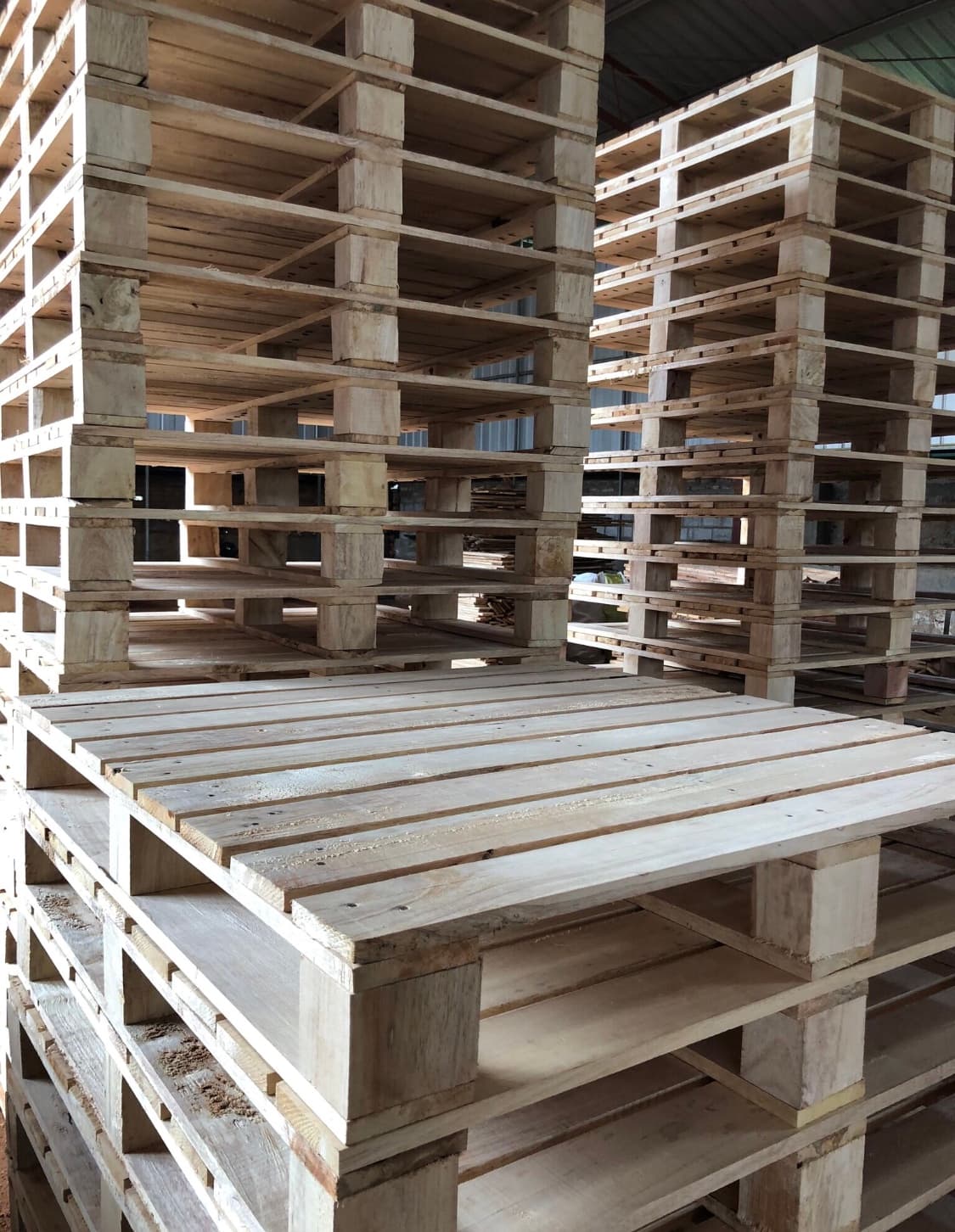
ISPM 15 certified, IPPC-stamped export pallets from CeyPall — manufactured and heat treated at our facility in Kochchikade with island-wide delivery.
In short: what are heat treated pallets?
Heat treated pallets are wooden pallets whose core is heated to 56°C for at least 30 continuous minutes, killing wood-boring pests at every life stage. This meets the ISPM 15 standard, earns the official IPPC stamp, and makes the pallet legal for export to 180+ countries. The treatment lasts the pallet's lifetime.
Explanation
What Are Heat Treated Pallets?
Heat treated pallets are wooden pallets that have been heated in a controlled kiln until the wood reaches a minimum core temperature of 56°C, maintained for at least 30 continuous minutes. This process eliminates insects, larvae, fungi and other wood-borne pests without the use of chemicals.
Heat treatment is the internationally approved method for making wooden packaging materials safe for cross-border shipment. It is governed by ISPM 15 (International Standards for Phytosanitary Measures No. 15), a regulation developed by the International Plant Protection Convention (IPPC) under the United Nations Food and Agriculture Organization.
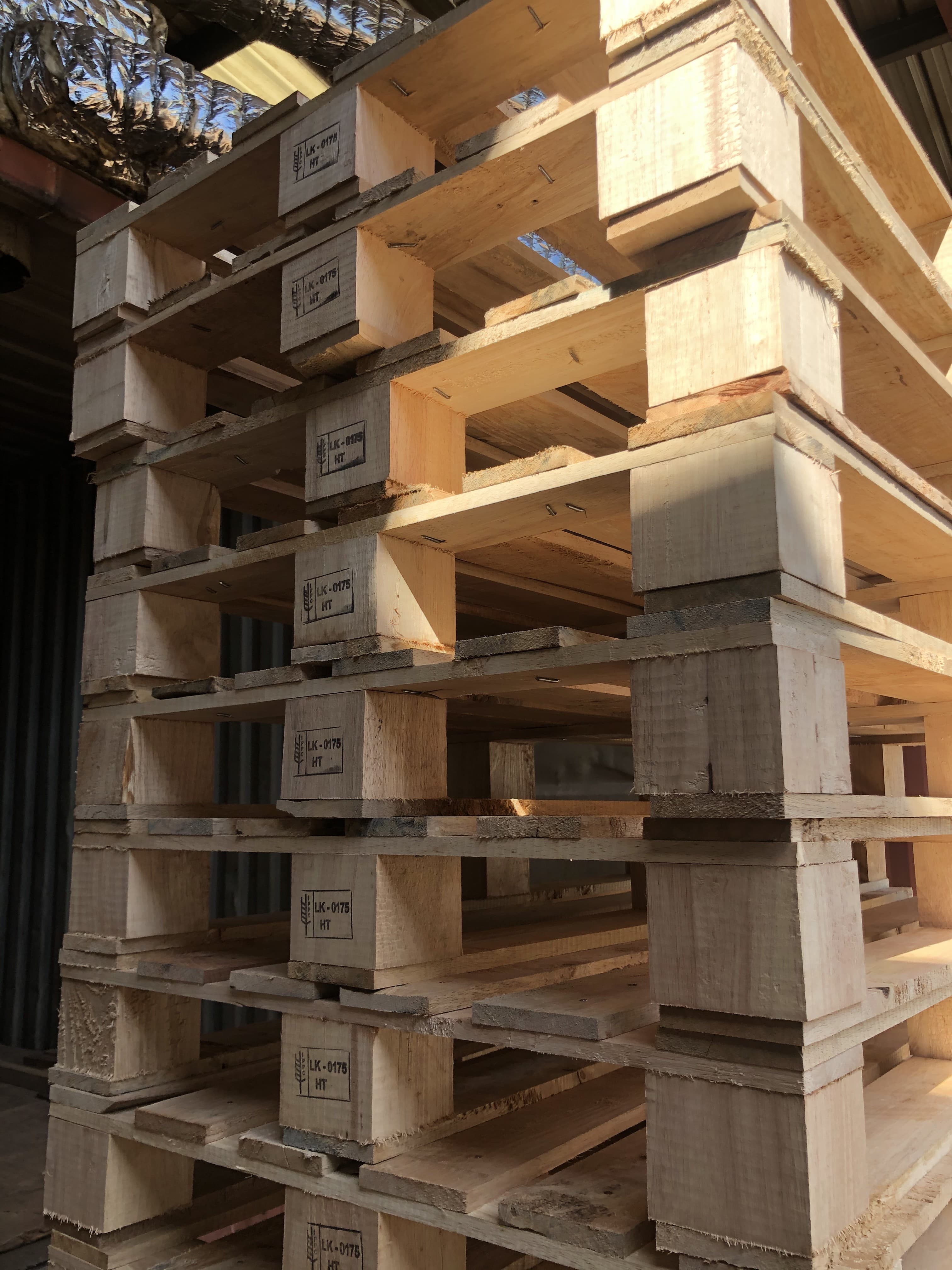
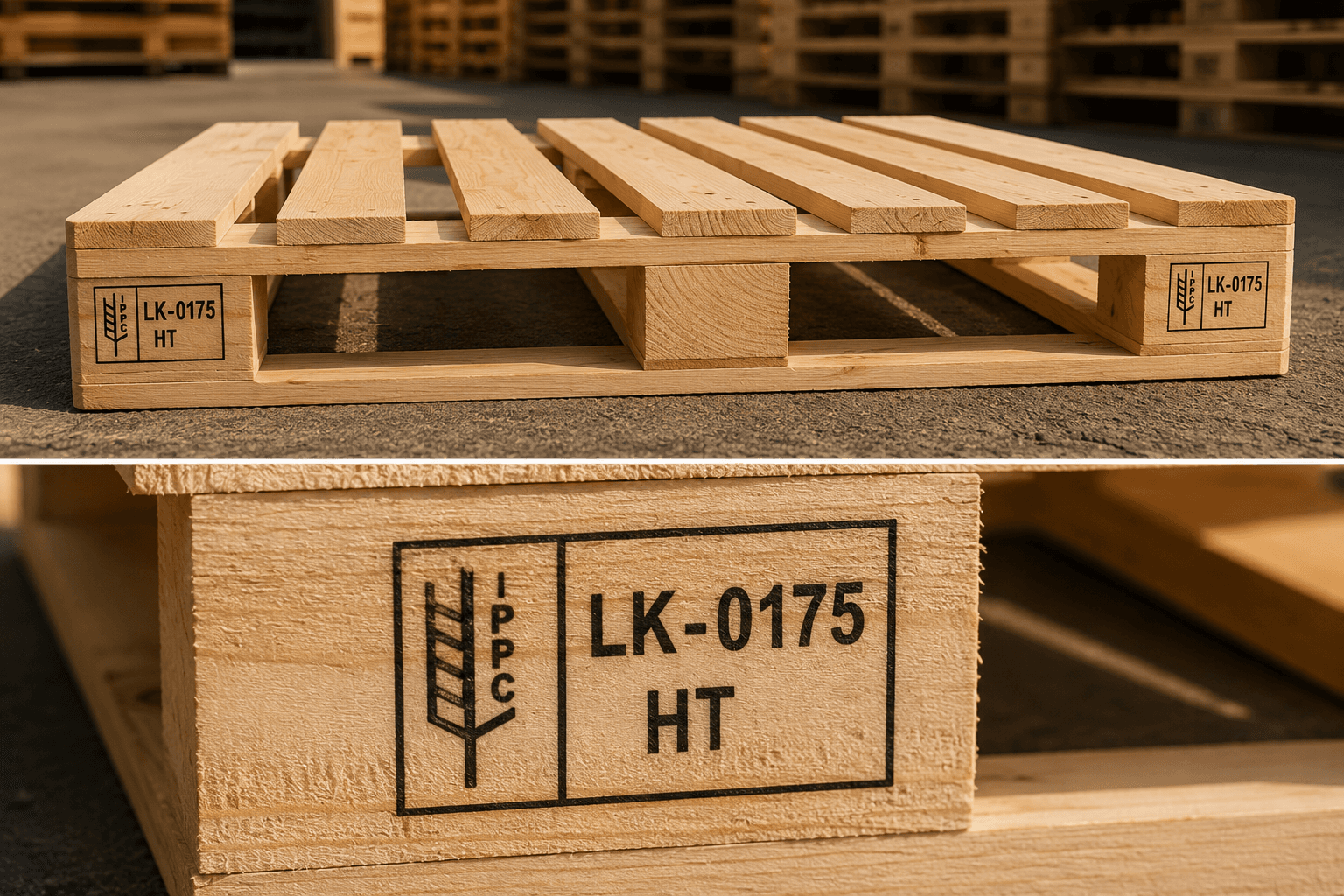
Every heat treated pallet that meets ISPM 15 requirements carries an official IPPC stamp. This stamp includes the country code (LK for Sri Lanka), the treatment provider's unique registration number assigned by the National Plant Quarantine Service (NPQS), and the treatment code HT — confirming the pallet has been heat treated to the required standard.
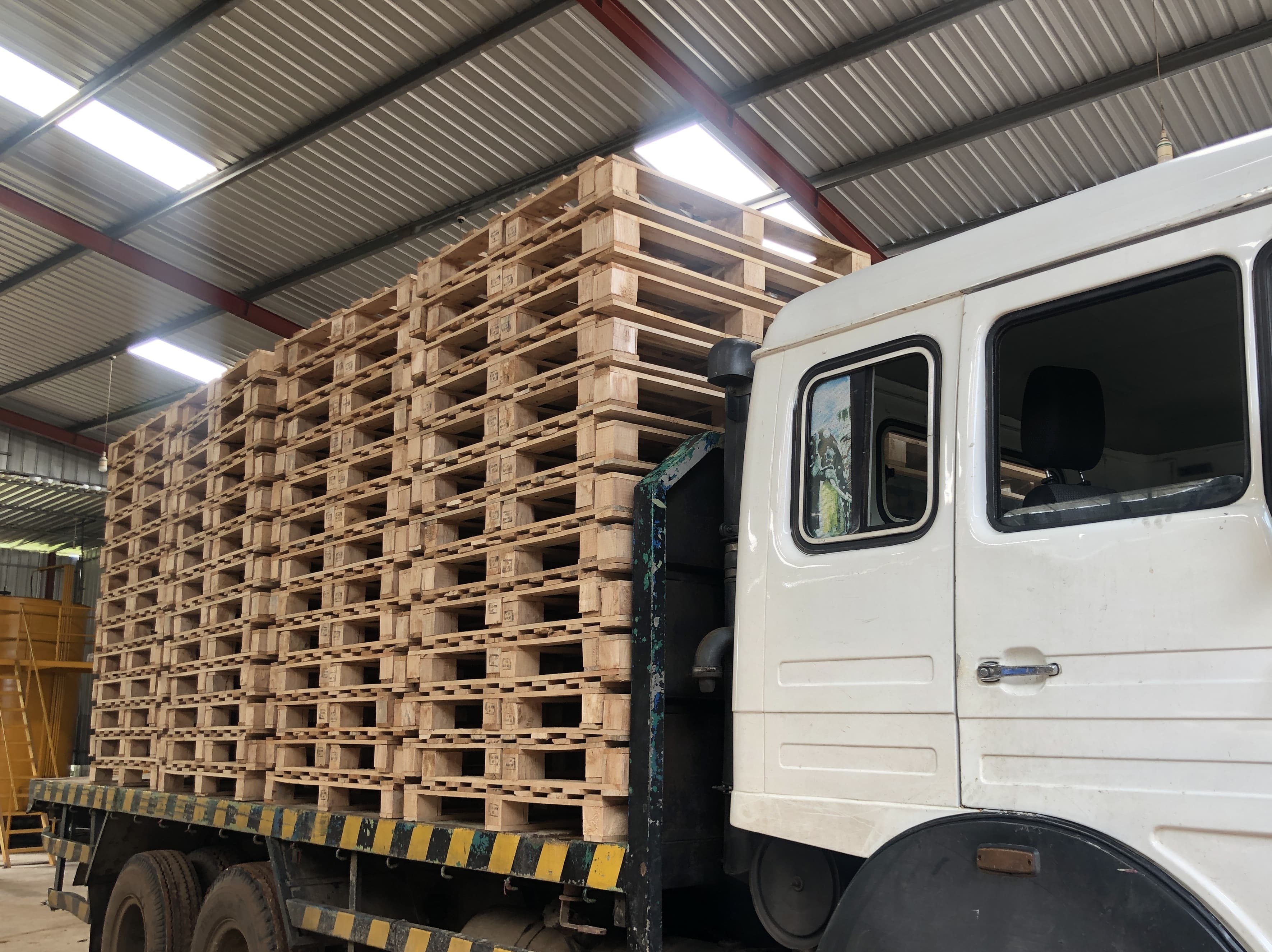
CeyPall (Pvt) Ltd is a registered ISPM 15 heat treatment provider in Sri Lanka, operating from our facility in Kochchikade. Every pallet we produce is heat treated in our on-site kiln and stamped with our IPPC mark before leaving the factory.
At a glance
- Treatment standardISPM 15 (IPPC)
- Core temperature required56°C minimum
- Holding duration30 continuous minutes minimum
- Treatment markIPPC stamp (HT code)
- Countries enforcing ISPM 15195 member nations
- CeyPall registrationNPQS-registered provider
Compliance
Why Heat Treatment Is Required for Export Pallets
Any wooden packaging material used in international trade must comply with ISPM 15. This includes pallets, crates, dunnage and other solid wood packaging with a thickness greater than 6mm. The regulation exists because untreated wood can harbour invasive insects and plant diseases that threaten agriculture and forestry in the destination country.
Without a valid IPPC stamp confirming heat treatment, wooden pallets will be rejected at the port of entry. Customs authorities in importing countries routinely inspect wood packaging, and non-compliant shipments face fumigation charges, quarantine delays or outright rejection.
For Sri Lankan exporters, this is especially relevant. Sri Lanka exports tea, apparel, rubber products, coconut-based goods, spices and manufactured components to destinations across Europe, North America, the Middle East, East Asia and Australasia. Every one of these destinations enforces ISPM 15. Using non-compliant pallets puts the entire shipment at risk.
Heat treatment is not optional for export. It is a legal requirement enforced by 195 member countries of the IPPC.
Our process
How CeyPall Heat Treats Pallets
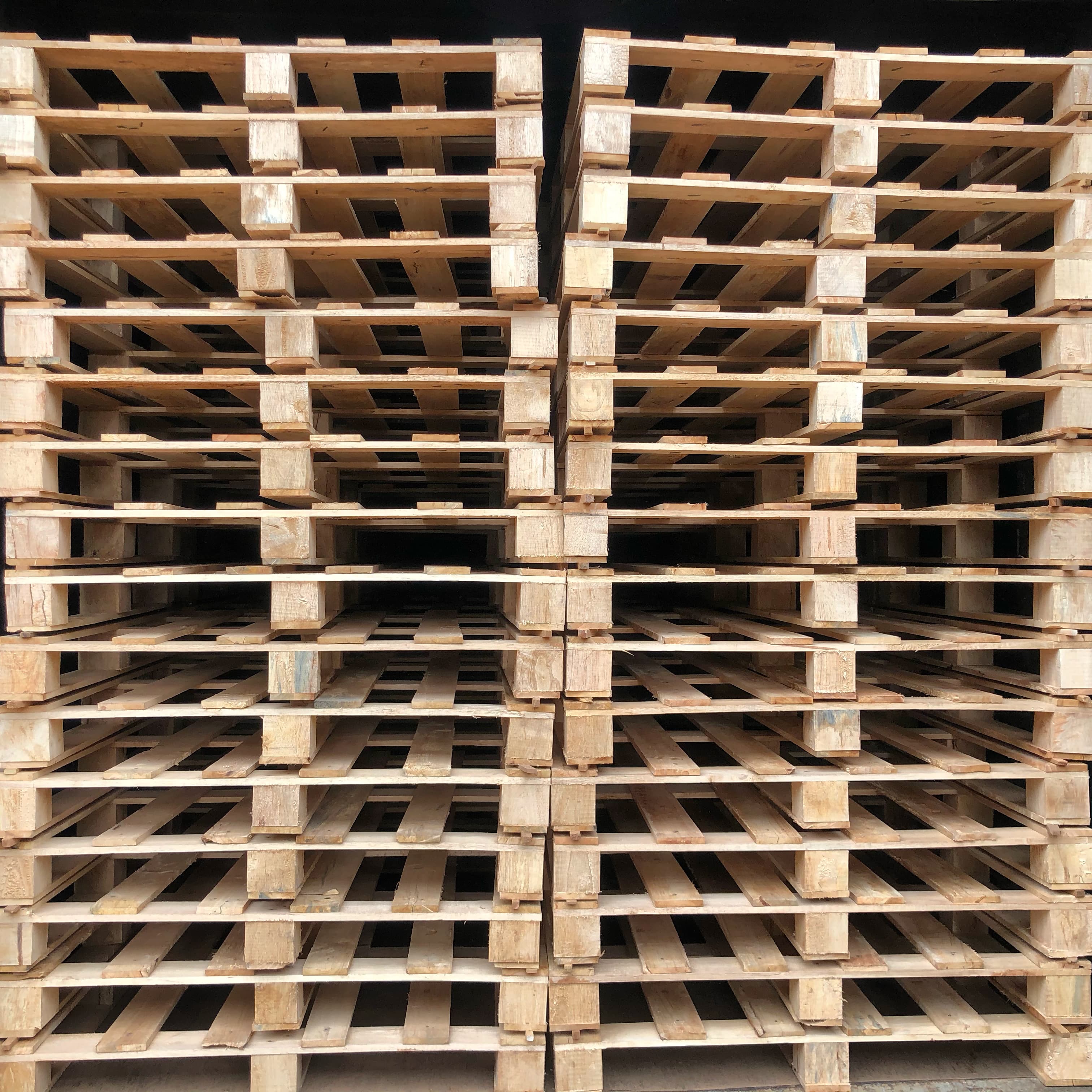
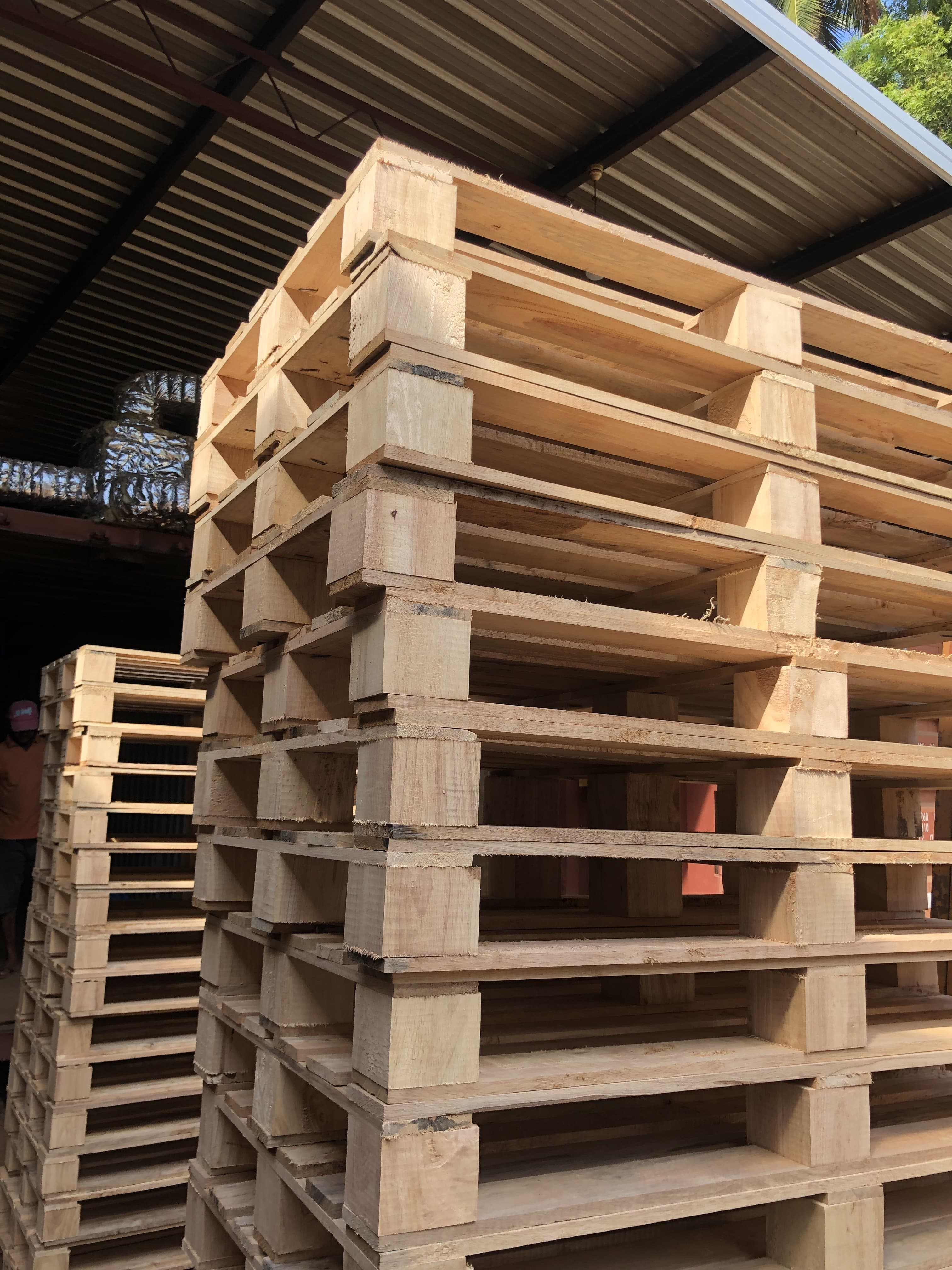
Every batch goes through a monitored, documented treatment cycle. Here is our process from raw timber to IPPC-stamped pallet.
- 01
Timber Selection and Preparation
We source rubber wood and other approved timber species. All timber is debarked and cut to the required dimensions before treatment. Debarking is a mandatory pre-treatment requirement under ISPM 15, as bark can harbour pests even after heat treatment.
- 02
Kiln Loading
Pallets or pallet components are loaded into our heat treatment kiln. Temperature probes are placed at the core of the thickest wood sections to ensure accurate monitoring throughout the process.
- 03
Heating Phase
The kiln temperature is raised until the core temperature of the wood reaches a minimum of 56°C. This is the critical threshold established by the IPPC as effective for eliminating quarantine-significant pests at all life stages — eggs, larvae, pupae and adults.
- 04
Holding Phase
Once the 56°C core temperature is achieved, it is maintained for a minimum of 30 continuous minutes. Our standard treatment cycle exceeds this minimum to provide additional assurance, particularly for thicker timber sections.
- 05
Cooling and Inspection
After the holding phase, the kiln is opened and pallets are allowed to cool. Each batch is inspected and treatment records are logged, including time-temperature data from the core probes.
- 06
IPPC Stamping
Every compliant pallet is stamped with our IPPC mark: the IPPC wheat sheaf logo, country code LK (Sri Lanka), our producer registration number (assigned by the NPQS), and the treatment code HT.
Certification mark
Understanding the IPPC Mark on Your Pallet
The IPPC stamp on a heat treated pallet is not just a logo. It is a regulatory mark that customs authorities around the world are trained to inspect. Each component has a specific meaning:
IPPC Logo
The wheat sheaf symbol of the International Plant Protection Convention. Confirms the pallet was treated under an IPPC-approved programme.
Country Code (LK)
Identifies the country where the treatment was carried out. LK is the ISO code for Sri Lanka.
Registration Number
A unique number assigned by the National Plant Quarantine Service (NPQS) of Sri Lanka to the treatment provider. This traces back to CeyPall's facility and treatment records.
Treatment Code (HT)
Confirms the treatment method was heat treatment as defined in ISPM 15.
Note: If any part of a heat treated pallet is later repaired or replaced, the pallet must be re-treated and re-stamped. The original IPPC mark must be obliterated and a new mark applied after the fresh treatment cycle.
Registration & certification
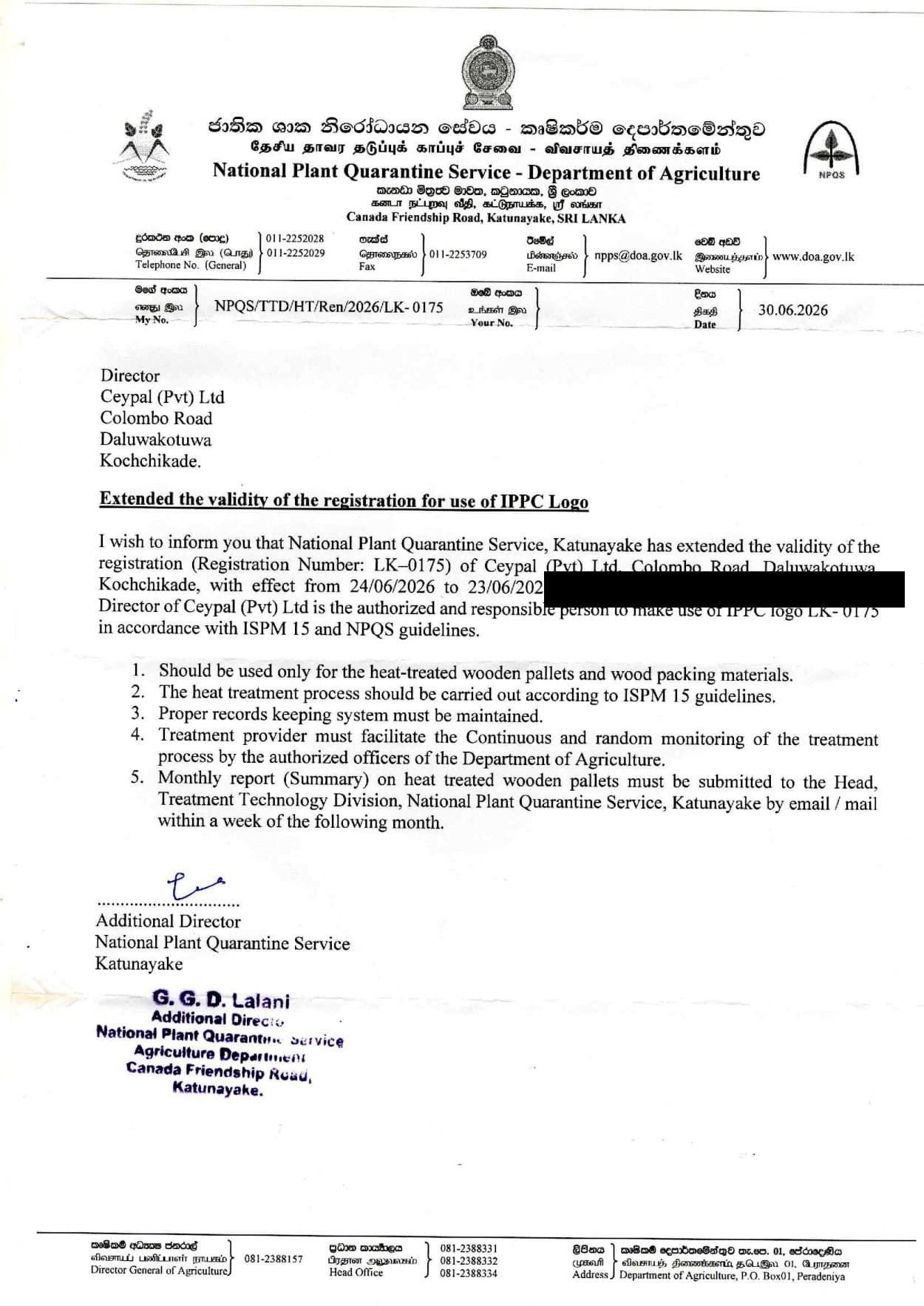
Registered with Sri Lanka's National Plant Quarantine Service
CeyPall operates under IPPC registration LK‑0175, issued by the National Plant Quarantine Service (NPQS), Department of Agriculture — the authority that governs ISPM 15 heat treatment in Sri Lanka. Our authorisation to heat‑treat wooden pallets and apply the IPPC mark has been in place since 2007 and is renewed annually.
The current registration is valid to 23 June 2027. It authorises CeyPall to apply the IPPC / ISPM 15 mark (LK‑0175, HT) to wooden pallets and wood packaging materials — the compliance proof that customs authorities worldwide are trained to inspect at the border.
- Registration No.
- LK-0175
- Issuing authority
- NPQS — Dept. of Agriculture
- Standard
- IPPC / ISPM 15 (HT)
- Registered since
- 2007
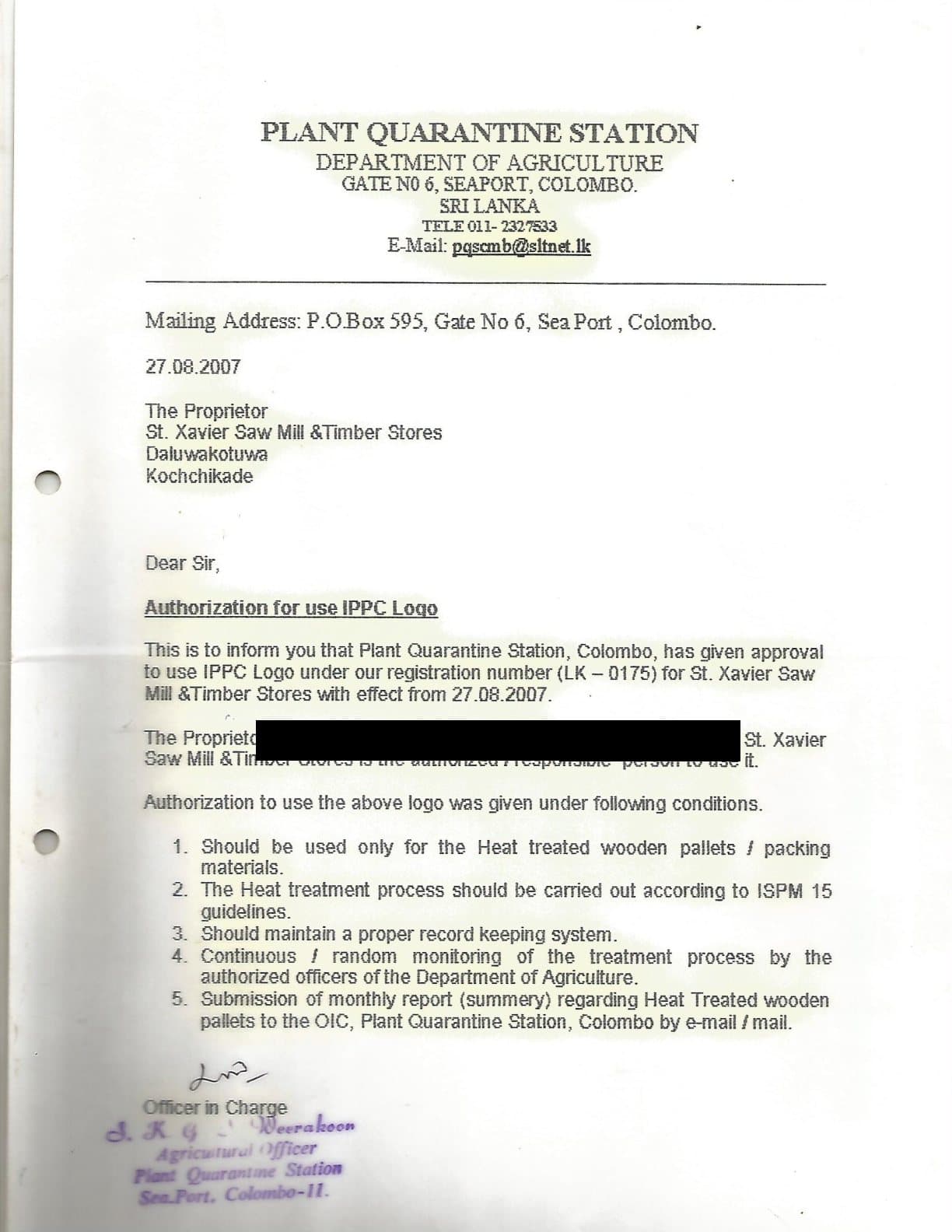
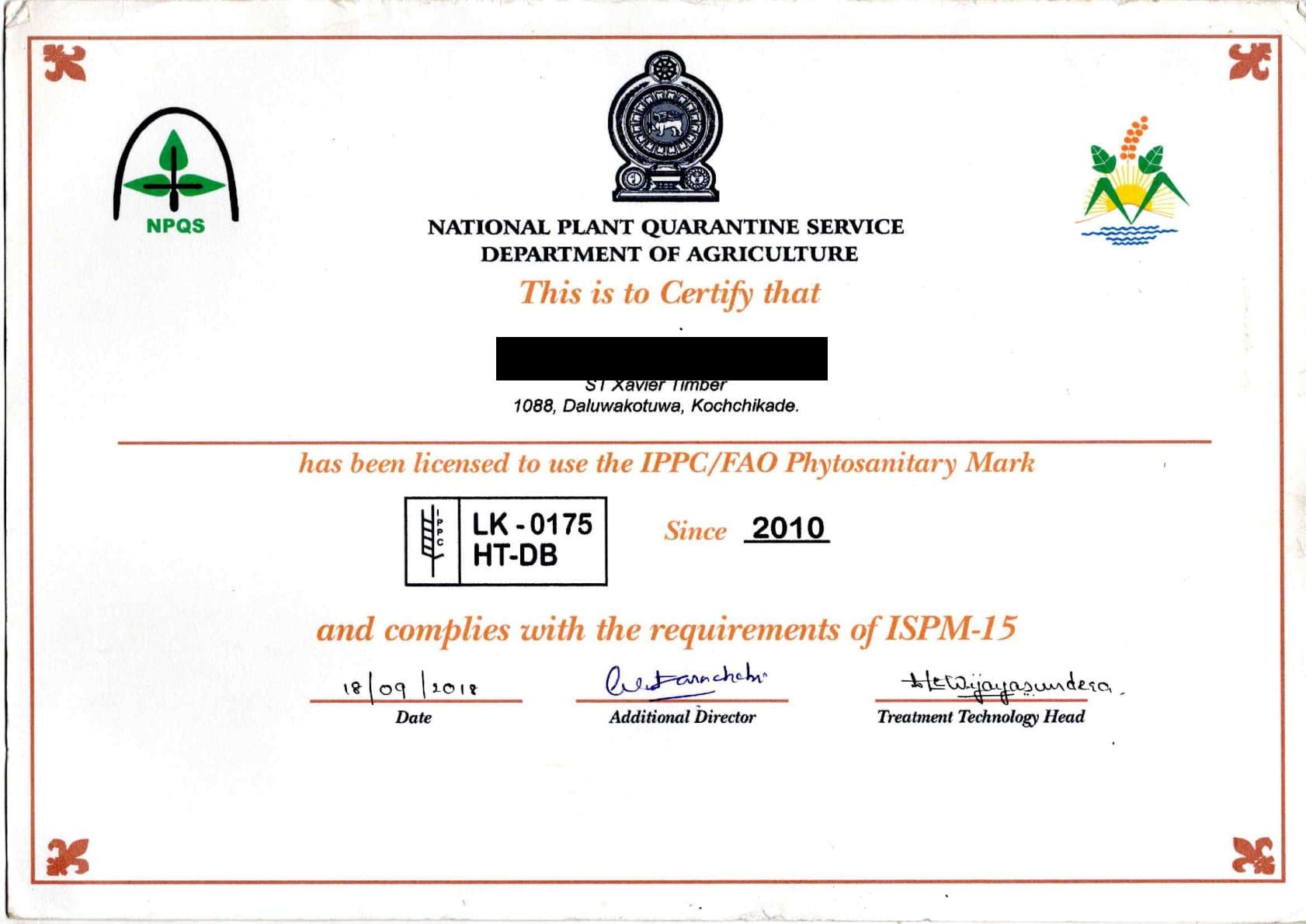
Registered under LK‑0175 since 2007
The same NPQS registration — LK‑0175 — has been held continuously since 2007. It was first issued to the founding family timber operation (St. Xavier) at our Kochchikade premises and is today renewed under CeyPall (Pvt) Ltd. The registration number, treatment facility and location remain unchanged.
Treatment comparison
Heat Treatment vs Methyl Bromide Fumigation
ISPM 15 historically approved two treatment methods: heat treatment (HT) and methyl bromide fumigation (MB). However, methyl bromide is an ozone-depleting substance and its use is being phased out under the Montreal Protocol. Heat treatment is the preferred and dominant method globally.
| Factor | Heat Treatment (HT) | Methyl Bromide (MB) |
|---|---|---|
| Method | Kiln heat — 56°C core for 30+ min | Chemical gas fumigation |
| Chemical residue | None | Chemical residue on wood |
| Food-contact safe | Yes | Not recommended |
| EU acceptance | Accepted | Banned / not accepted |
| Environmental impact | No emissions | Ozone-depleting (Montreal Protocol phase-out) |
| Global acceptance | All 195 IPPC nations | Declining — many countries ban it |
| IPPC mark code | HT | MB |
| Used by CeyPall | Yes — exclusively | No |
No chemical residue
Heat treatment uses thermal energy only. No residues on wood, safe for food-contact packaging.
Environmentally responsible
No harmful emissions, no ozone depletion.
Permanent effectiveness
Treatment lasts for the lifetime of the pallet provided no components are replaced.
Broader acceptance
Several countries have already banned methyl bromide. Heat treatment is universally accepted across all 195 IPPC member nations.
Reduced moisture and weight
Heating drives moisture out of the wood, reducing pallet weight and lowering mould risk during transit.
CeyPall uses heat treatment exclusively. We do not use methyl bromide or any chemical fumigation.
Who we supply
Industries We Serve
Tea Exporters
Pallets sized for tea chests and bulk packaging, fully ISPM 15 compliant for global tea markets.
Apparel and Garment Exporters
Consistent pallet supply for factories in Katunayake, Biyagama and Seethawaka EPZs. Standard and custom sizes.
Coconut Product Exporters
From desiccated coconut to coconut oil and activated carbon. IPPC-stamped pallets for EU, US and Asian markets.
Rubber Product Exporters
Durable, load-rated pallets for heavy goods including rubber gloves, tyres and industrial components.
General Manufacturers and Freight Forwarders
Standard sizes (1200×1000mm, 1200×800mm, 1100×1100mm) and custom dimensions for logistics operations across Sri Lanka.
Not listed? Contact us — if your business exports goods, we almost certainly supply what you need.
Why CeyPall
Why Choose CeyPall for Heat Treated Pallets
We manufacture, treat and stamp every pallet at our Kochchikade facility. One supplier, full control, full documentation.
ISPM 15 Certified
Registered heat treatment provider with the NPQS. Every pallet carries our official IPPC stamp.
On-Site Kiln
Treatment kiln at our manufacturing facility in Kochchikade. We control the entire process from timber to finished pallet.
Custom Sizing
Pallets manufactured to any specification for non-standard cargo dimensions and load requirements.
Island-Wide Delivery
Delivery to factories, EPZs and ports across Sri Lanka including Colombo Port and Katunayake.
Full Documentation
Treatment certificates, IPPC compliance documentation and heat treatment records for every consignment.
Looking for more information about our manufacturing facility and export pallet supply? Learn more about export pallet manufacturing at CeyPall →
Common questions
Frequently Asked Questions
What temperature are heat treated pallets heated to?
Heat treated pallets must reach a minimum core wood temperature of 56°C (132.8°F), maintained for at least 30 continuous minutes. This is the standard specified by ISPM 15 and is effective at eliminating wood-borne pests at all life stages.
Do heat treated pallets need to be re-treated over time?
No. The heat treatment lasts for the lifetime of the pallet. However, if any part of the pallet is repaired or a component is replaced, the entire pallet must be re-treated and re-stamped with a new IPPC mark.
What is the difference between heat treated and kiln dried pallets?
Kiln drying reduces moisture content in wood but is not automatically equivalent to ISPM 15 heat treatment. Heat treatment specifically requires achieving a core temperature of 56°C for 30 minutes, which must be verified by temperature probes and certified by a registered treatment provider. Only pallets treated under an approved ISPM 15 programme can carry the IPPC stamp.
Can heat treated pallets be used for food export?
Yes. Because heat treatment uses no chemicals, heat treated pallets are suitable for direct and indirect food-contact applications. This makes them appropriate for tea, spice, coconut product and other food export from Sri Lanka.
What happens if I export goods on a pallet without an IPPC stamp?
The shipment may be stopped at the destination port. Customs authorities can quarantine the goods, fumigate the packaging at the exporter's expense, or reject the shipment entirely. Non-compliance can also result in fines and damage your reputation with importing buyers.
Does CeyPall provide treatment certificates?
Yes. We provide full treatment documentation including heat treatment certificates, batch treatment records and IPPC compliance letters for every order.
What pallet sizes does CeyPall offer?
We manufacture standard international sizes (1200×1000mm, 1200×800mm, 1100×1100mm) and custom dimensions to fit any container or cargo specification.
How quickly can CeyPall deliver heat treated pallets?
Lead times depend on order volume and specification. For standard sizes, we typically deliver within 3–5 working days. Contact us for a specific timeline based on your requirements.
More questions? Contact us directly or call +94 714 711 417.
Keep exploring
Related pages
Get ISPM 15 Certified Heat Treated Pallets
Contact CeyPall for a quotation or to discuss your export pallet requirements.