
Load-Rated 1,500–2,000 kg+
Heavy-Duty Wooden Pallets in Sri Lanka
Reinforced heavy-duty wooden pallets for machinery, drums and dense cargo — thicker decks, wider stringers, engineered for high static and racking loads. Heat treated for export or VPI-treated for storage.
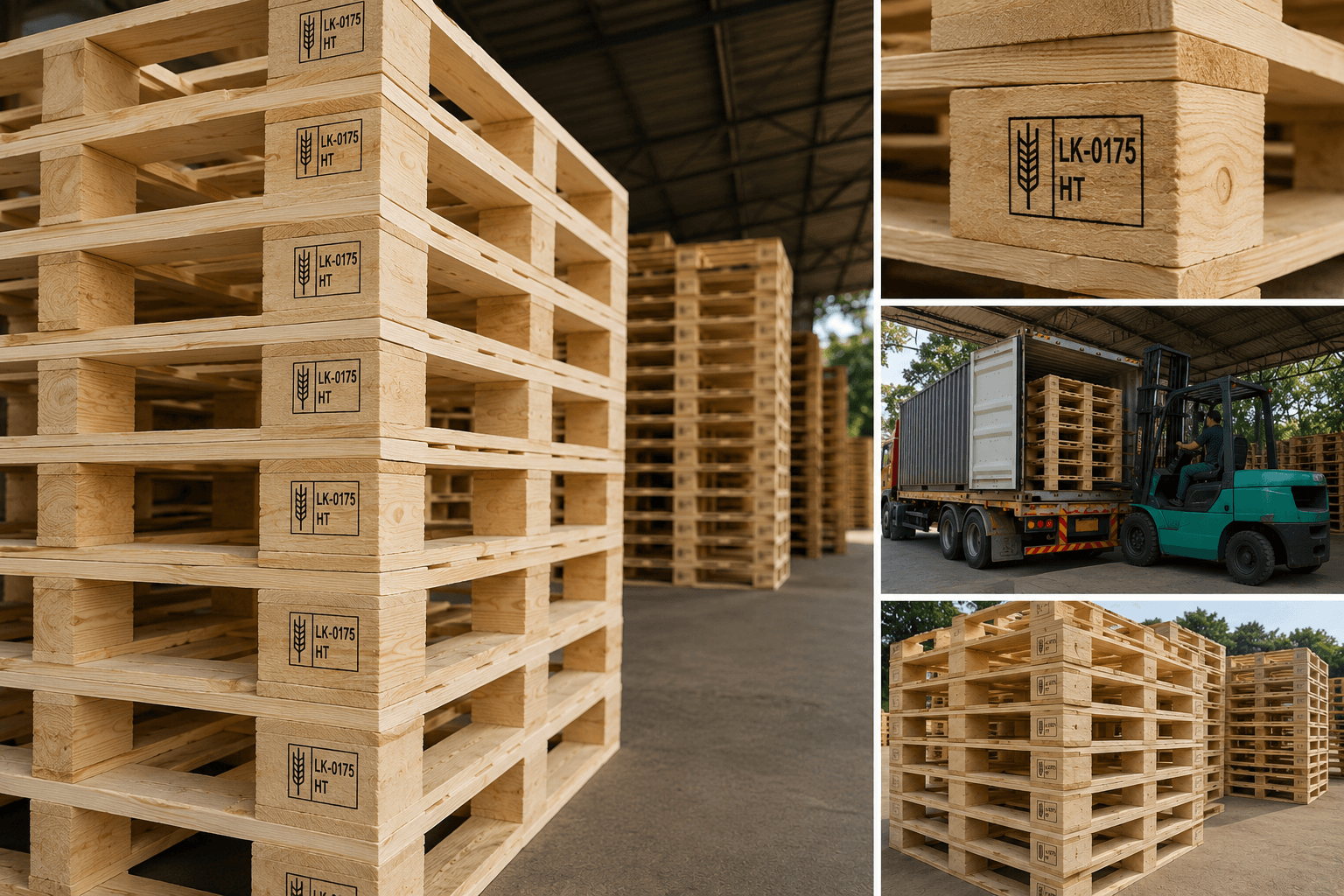
In short: what is a heavy-duty wooden pallet?
A load-rated pallet built with thicker deck boards (typically 22–25 mm+), reinforced stringers and tighter deck spacing so it can safely bear 1,500 kg or more. Used for machinery, drums, tyres and dense industrial cargo where a standard pallet would deflect or fail.
Definition
Built for Weight, Not Just Volume
Standard export pallets are engineered for cost and light-to-medium cargo. A heavy-duty pallet takes the same footprint and re-engineers every component — timber grade, board thickness, stringer size, deck spacing and bottom deck — to bear heavier loads through repeated handling, stacking and racking.
CeyPall builds heavy-duty pallets to a stated static load, dynamic load and (where required) racking load. Tell us how the pallet will be used and we will specify the timber, thickness and framing that meet the requirement — see the pallet load capacity guide for the underlying engineering.
Load classes
Heavy-Duty Pallet Ratings
Common rating bands we manufacture. Exact figures are set at design against your specified static, dynamic and racking loads.
| Class | Static load | Typical use |
|---|---|---|
| Heavy duty | 1,500–2,000 kg | Machinery, engineering equipment, dense industrial cargo. |
| Extra heavy duty | 2,000–2,500 kg | Tyres, drums, heavy castings, bulk metal parts. |
| Custom heavy build | 2,500 kg+ | Specified per project — timber and framing engineered to load. |
What sets the rating
Six Specification Drivers
Timber species & grade
Denser, higher-grade timber carries more load per unit thickness and resists compression failure under repeated handling.
Deck board thickness
Heavy-duty decks typically use 22–25 mm+ boards versus 15–18 mm for standard export pallets — the deck resists bending under concentrated loads.
Stringer configuration
Wider or taller stringers, or block framing, control how load is transferred to the floor and forklift and prevent sag.
Deck spacing
Tighter top-deck spacing distributes point loads across more boards, protecting fragile or narrow-footprint cargo.
Entry type
Four-way entry gives handling flexibility; two-way entry with continuous stringers is often stiffer for heavy static loads.
Bottom deck
A full or reinforced bottom deck is essential for racking and stacked storage — it prevents diagonal deflection under load.
Applications
Where Heavy-Duty Pallets Are Used
Machinery & engineering
Load-rated bases for gearboxes, motors, compressors, castings and fabricated assemblies.
Drum & IBC handling
Four-drum and IBC-format pallets built to bear liquid chemical and lubricant loads securely.
Tyre & rubber
Dense crepe rubber, RSS sheets and tyre exports need pallets that will not fail mid-shipment.
Metal & fabricated goods
Pallets for coils, plates, pipes and bulk metal parts, with reinforced decks for concentrated loads.
Ceramics & tiles
Heavy stacked loads on tight deck spacing to prevent point-load damage.
Food & beverage bulk
Bulk food-grade loads that combine weight with hygiene requirements.
Common questions
Heavy-Duty Pallet FAQs
What is a heavy-duty wooden pallet?
A heavy-duty wooden pallet is a load-rated pallet built with thicker deck boards, wider stringers or block framing so it can safely carry 1,500 kg or more. It is designed for machinery, drums, tyres and other dense industrial cargo where a standard pallet would deflect or fail.
How much weight can a heavy-duty pallet hold?
CeyPall heavy-duty pallets are typically rated for 1,500–2,000 kg static load, with higher capacities available on request. The exact figure depends on timber species, board thickness, stringer size and deck configuration. We design and build to your specified static, dynamic and racking loads.
What is the difference between a heavy-duty pallet and a standard pallet?
Standard export pallets are optimised for cost and light-to-medium cargo — typically up to 1,000–1,500 kg. Heavy-duty pallets use thicker boards (often 22–25 mm+ instead of 15–18 mm), reinforced stringers and tighter deck spacing to carry heavier, denser loads without failure over repeated handling.
Can heavy-duty pallets be used for export?
Yes. Heavy-duty pallets can be heat treated to ISPM 15 and IPPC-stamped just like standard export pallets. This is common for machinery, engineering equipment and tyre exports where cargo weight and international shipping both apply.
Are heavy-duty pallets suitable for racking?
Yes, provided the pallet is specified for racking. Racking load is different from static or dynamic load because the pallet is only supported at its edges on the beam. Tell us your racking type, beam spacing and rated load and we will design the deck and stringer to bear that load without deflection.
Keep exploring
Related pages
Order Heavy-Duty Pallets
Reinforced, load-rated wooden pallets — manufactured in Sri Lanka, delivered island-wide.